Once again, like the ostrich, we put our head in the sand
A Ghanaian father brought his son to the Bronx for a better life, and the boy was shot on his way to school. Mocking the father is easier than asking why so many families leave.
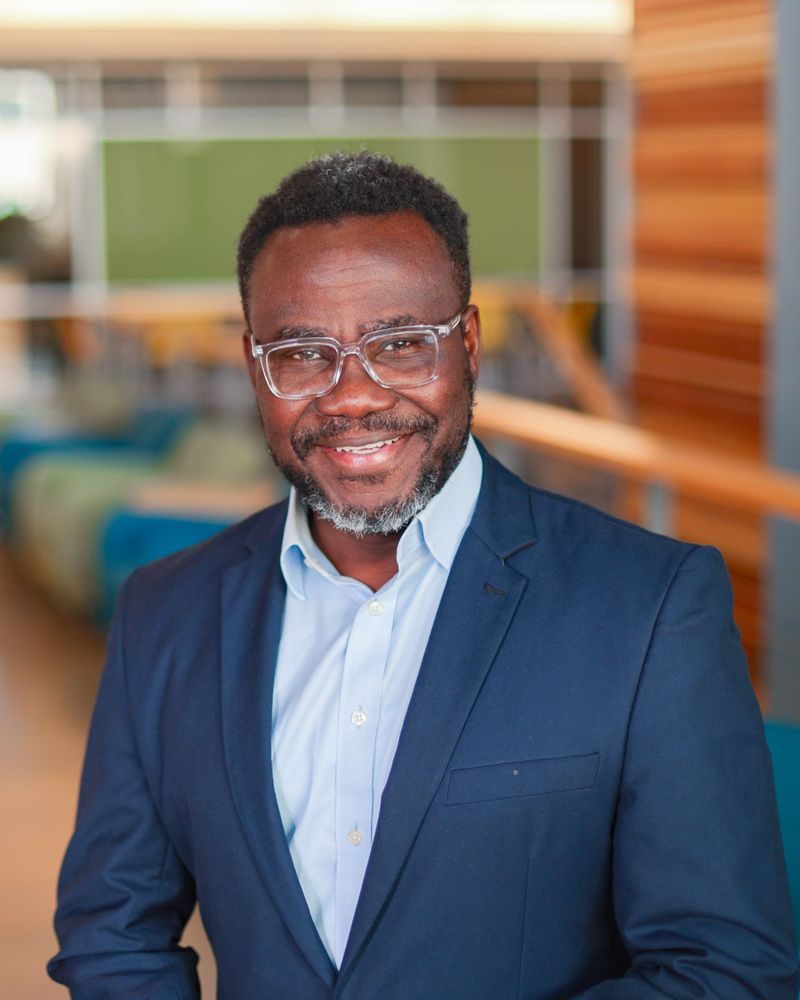 Stephen Mante Anti
I used to live a few blocks from Crotona Place. So when I saw that corner in the news, I could picture it. On the morning of October 29, Javits Badu Nkansah Frimpong was walking near there on his way to DreamYard Preparatory School, a public high school where he was in tenth grade. Near East 171st Street, somebody shot him in the abdomen. In broad daylight. He ran about a block, collapsed, and died later that day at St. Barnabas Hospital. He was 15. He’d been in New York for about a year. His mother, Doris Adu Gyamfi, wanted him to become a doctor.
His father, Thomas Frimpong, is 60 and drives a yellow cab. He brought his son here for a better life. And before the boy was even buried, some of us back home had already found someone to blame: the father. Javits had spent two terms at Adisadel College. Why would anybody take his son out of Adisco to come and die in the Bronx?
I’ve read those comments. Honestly, they say more about us than about Thomas Frimpong.
About Adisadel
Look, I get it. Adisadel is a Category A school. Only about 8 percent of our senior high schools make that tier, and a place there is what most Ghanaian parents pray for. Looking back now, pulling a boy out of it looks reckless.
But we’re only saying that because of how it ended. When a parent takes a child abroad and the child becomes a nurse in Maryland or an engineer in Toronto, nobody calls the parent reckless. We celebrate him at family gatherings. We ask him how he did it. Same decision. It’s wisdom when it works and foolishness when it ends in a Bronx hospital. That’s hypocrisy, and this time we’ve aimed it at a man burying his son.
And think about what the Adisadel argument actually admits. Take a father whose son had already won a place at one of the best schools in the country. He looked at the road ahead (secondary school, university, then the job market) and decided the odds were better abroad. If that’s how the parent of an Adisadel student sees things, what do we expect the parent of a child posted to a struggling Category C school to think?
The gun that killed Javits is America’s problem, and America has to answer for it. Our government has been right to demand a full investigation, and President Mahama has called on Washington to deal with its gun violence. But why was this family split between Ghana and the Bronx in the first place? That one’s on us.
Exam results that go up and down
People like to say our education standards keep falling. The WASSCE numbers are messier than that, and in a way that’s worse. In Core Mathematics, the share of candidates getting A1 to C6 was 62.23 percent in 2023, 66.86 percent in 2024, 48.73 percent in 2025 and 60.75 percent in 2026. Between 2015 and 2019 it averaged about 41 percent. English, the language every other paper is written in, has dropped four years in a row, from 73.11 percent in 2023 to 62.40 percent this year. How do you plan a child’s future around a system that lurches like that?
When the 2025 results came out, President Mahama blamed years of neglect of basic education. His Education Minister, Haruna Iddrisu, said the government wasn’t responsible for the decline. The good years of 2020 to 2023 had been widely celebrated. You know how it goes in Ghana: good results are claimed, bad results are inherited. Then this year WAEC cancelled or withheld the results of 8,295 candidates, and subject results in 169 schools were held back over alleged collusion. Dr Kojo Asante of CDD-Ghana has even said parents themselves feed the cheating culture.
Mahama is right about one thing, though: the rot starts long before SHS. Dr Peter Partey Anti, a lecturer at UCC who runs the civil society group IFEST, has been going through UNICEF’s new Foundational Learning Action Tracker scorecard for Ghana. Ghana scores 3.1 out of 4 overall, which sounds fine until you look closer. On teaching the basics, reading and counting in the early grades, we score 2.5, below the 2.9 average for lower-middle-income countries. And on that same measure Ghana gets 3.5 for its policies but only 1.5 for building the systems that deliver them. We write good policies and then can’t make them work in a classroom. Dr Anti’s test is simple: judge these policies by how many children can actually read, write and do basic sums. Back in February his group had already asked the Education Ministry and GES for a public plan to lift WASSCE results.
So pass rates jump by double digits from one year to the next, cheating is serious enough to hold up results in 169 schools, the foundations are weak, and our leaders read the numbers mostly to score political points. That’s the system the comment section wanted Javits to stay in.
Free, but not equal
Let me give Free SHS its due. It opened secondary school to many children whose parents could never have paid the fees, and I’d defend that any day. But free admission didn’t make the schools equal. Research led by Dr Jacob Oppong Nkansah of the University of Education, Winneba, presented by the Centre for Policy Scrutiny, found that Category A and B schools thrive, carried by their old students and PTAs, while the lower categories mostly struggle to survive. Another recent study found families still paying for a policy called free, and concluded that it rests on politics more than on a plan.
The sorting starts at 15. Placement follows BECE grades, so children from weaker basic schools, many of them rural, end up in the weakest senior high schools. In Twifo-Atti Morkwa, a University of Education study found students locked out of Category A schools by their grades. Researchers writing in The Conversation found that about 46 percent of students who qualify for tertiary education come from the top fifth of senior high schools. From the bottom fifth? 8 percent. Category C students told those researchers that their teachers, and even their own parents, didn’t expect much from them.
Quality education in Ghana has a door. It opens most easily for families who can already pay for a good private basic school, extra classes, and the provisions that keep a child comfortable in an elite boarding house. The children of the political class walk right through it, and many of them finish their schooling abroad anyway.
Why families leave
People don’t leave over exam results alone. They leave because the ground keeps shifting under their feet. In 2022 the cedi lost more than half its value against the dollar, and inflation hit 54.1 percent by December. That same month the government started restructuring its debts and went to the IMF. Imagine you’re a trader, a teacher or a taxi driver who has been saving for your child’s future. In one year, half of it is gone.
And the jobs haven’t caught up. The Ghana Statistical Service says unemployment among people aged 15 to 35 averaged 21.9 percent in the first three quarters of 2025, against 12.8 percent nationally. Close to two million young people were neither working nor in school or training in the third quarter of that year. That’s about one young Ghanaian in five. Even among those who do have jobs, only 58 percent told GSS that their level of education matched what the job required.
Kofi Asare of Africa Education Watch has warned that the technical and vocational schools meant to give young people practical skills are starved of money. They manage about six of the 20 practical sessions a year the curriculum calls for, and only 10 of Ghana’s 261 TVET schools have internet access. Prof. Kwaku Asare put the bigger point bluntly: “Fix the politics, and the economy has a fighting chance.”
So when a chance to travel comes, people take it. Sometimes it’s a visa they plan to overstay, hoping to regularise their papers later and build a life. Some make it. Some spend years in the shadows. We all know these people. They’re our siblings, our classmates, the people we sit with in church, and their remittances pay school fees back home. You can’t insult them online on Monday and call them for money on Friday.
The ostrich
There’s an old saying that the ostrich buries its head in the sand when danger comes. It’s not true, by the way. The bird lowers its head to turn its eggs or to flatten itself against the ground. We’re the only ones who actually do it.
And we did it again this month. A father made a hard decision about his son’s future. It ended on a Bronx sidewalk in broad daylight, and some of us answered his grief with mockery, as if the country he left had offered his son a clear path. Shatta Wale said it better than a lot of our commentators: people leave Ghana because the economy makes it hard to reach their dreams at home.
Lifting our heads out of the sand starts with admitting what the system our leaders run actually does. It sorts children by class at 15. It writes good policies and fails to deliver them. Its exam results swing from year to year, and it sends young people into a job market with no room for them. After that, we can judge our education ministers by what happens in Twifo-Atti Morkwa as well as at Adisadel. And we can let Thomas Frimpong grieve his son in peace, without a lecture on what he should have done.
Javits deserved to grow up safe in New York. He also deserved a country where staying home was a real choice.